
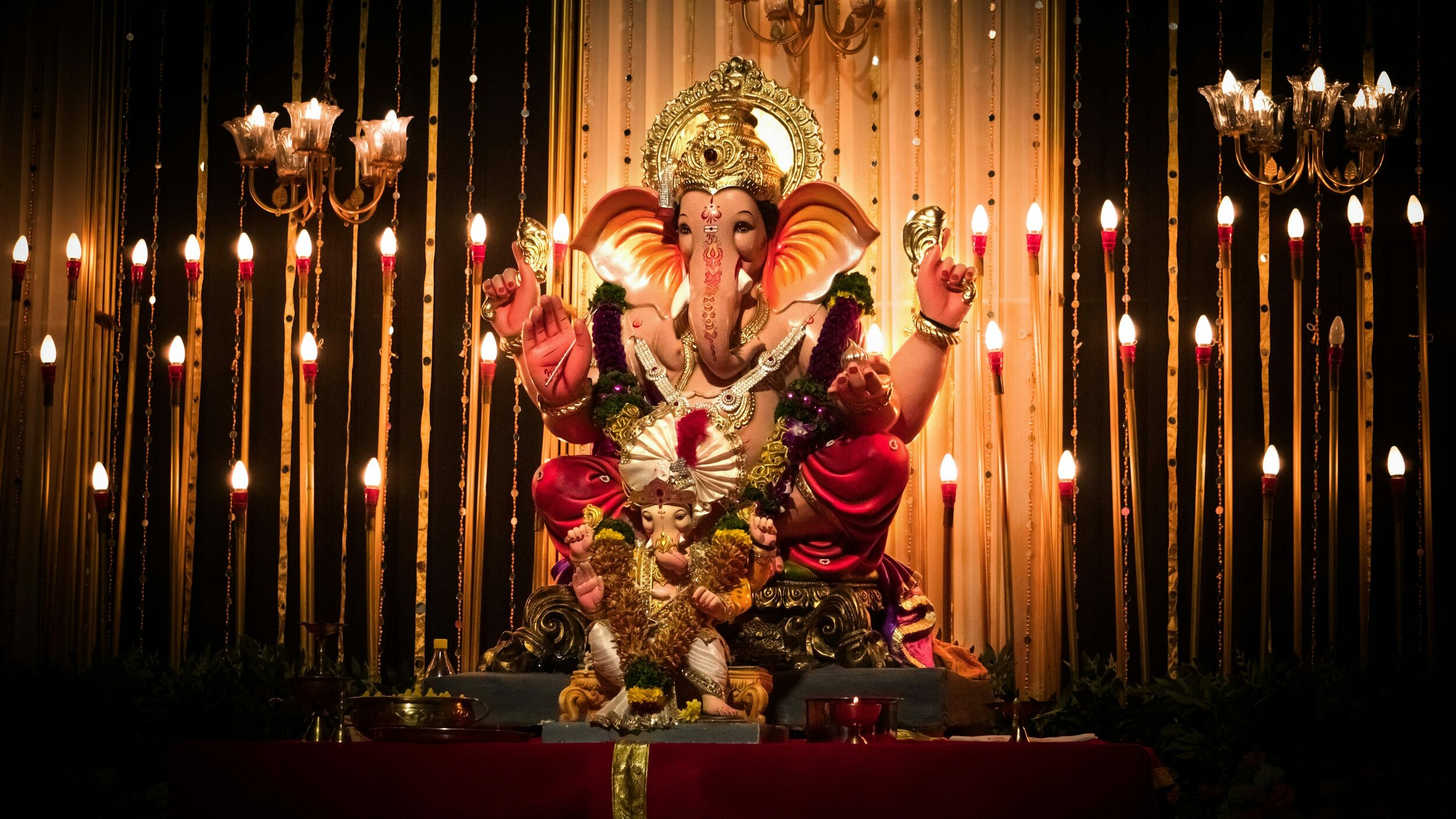
- Why devotees remember Ganesha at new beginnings
- The 108 names of Lord Ganesha
- Meanings of a few Ganesha names
- How to approach the Ganesha Ashtottara recitation
- Further reading: books on Ganesha
- Ganesh Chalisa: Pocket Size Book (Hindi & English)
- 108 Names of Lord Ganesha: Meanings, Mantras & Spiritual Significance
- 108 Divine Names of Lord Ganesha
- Frequently asked questions about the 108 names
- Does every version contain the same 108 names?
- Do I have to chant at a particular hour or for a fixed number of days?
- Will chanting remove every obstacle?
- Text and transliteration sources
Why devotees remember Ganesha at new beginnings
Many people know the feeling of beginning something important with a little uncertainty and wishing for steadiness. In many Hindu traditions, remembering Gaṇeśa at the start of a venture is one way of meeting that moment.
The 108 names of Lord Ganesha appear in a devotional recitation called the Aṣṭottara Śatanāmāvali. Each name offers a way to praise or remember a form, quality or role associated with Gaṇeśa. The list below follows one published sequence, transliterated from Sanskrit into IAST for easier reading.
A note on versions: Hindu communities preserve different recensions, spellings and sequences. This is one version, not a claim that there is a single universal list. If your family, temple or teacher uses another text, follow that tradition.
This guide is offered as devotional and cultural information. It does not promise that chanting will guarantee success, remove every difficulty or produce a particular material or health outcome.
The 108 names of Lord Ganesha
Each line follows the familiar pattern Oṃ [name] namaḥ, a salutation to Gaṇeśa by that name. Diacritics show distinctions in Sanskrit sounds; this transliteration is a reading aid, not a pronunciation lesson.
- Oṃ Gajānanāya namaḥ
- Oṃ Gaṇādhyakṣāya namaḥ
- Oṃ Vighnarājāya namaḥ
- Oṃ Vināyakāya namaḥ
- Oṃ Dvaimāturāya namaḥ
- Oṃ Dvimukhāya namaḥ
- Oṃ Pramukhāya namaḥ
- Oṃ Sumukhāya namaḥ
- Oṃ Kṛtine namaḥ
- Oṃ Supradīpāya namaḥ
- Oṃ Sukhanidhaye namaḥ
- Oṃ Surādhyakṣāya namaḥ
- Oṃ Surārighnāya namaḥ
- Oṃ Mahāgaṇapataye namaḥ
- Oṃ Mānyāya namaḥ
- Oṃ Mahākālāya namaḥ
- Oṃ Mahābalāya namaḥ
- Oṃ Herambāya namaḥ
- Oṃ Lambajaṭharāya namaḥ
- Oṃ Hrasvagrīvāya namaḥ
- Oṃ Mahodarāya namaḥ
- Oṃ Madotkaṭāya namaḥ
- Oṃ Mahāvīrāya namaḥ
- Oṃ Mantriṇe namaḥ
- Oṃ Maṅgalasvarāya namaḥ
- Oṃ Pramadhāya namaḥ
- Oṃ Prathamāya namaḥ
- Oṃ Prājñāya namaḥ
- Oṃ Vighnakartre namaḥ
- Oṃ Vighnahartre namaḥ
- Oṃ Viśvanetre namaḥ
- Oṃ Virāṭpataye namaḥ
- Oṃ Śrīpataye namaḥ
- Oṃ Vākpataye namaḥ
- Oṃ Śṛṅgāriṇe namaḥ
- Oṃ Aśritavatsalāya namaḥ
- Oṃ Śivapriyāya namaḥ
- Oṃ Śīghrakāriṇe namaḥ
- Oṃ Śāśvatāya namaḥ
- Oṃ Balāya namaḥ
- Oṃ Balotthitāya namaḥ
- Oṃ Bhavātmajāya namaḥ
- Oṃ Purāṇapuruṣāya namaḥ
- Oṃ Pūṣṇe namaḥ
- Oṃ Puṣkarotṣiptavāriṇe namaḥ
- Oṃ Agragaṇyāya namaḥ
- Oṃ Agrapūjyāya namaḥ
- Oṃ Agragāmine namaḥ
- Oṃ Mantrakṛte namaḥ
- Oṃ Cāmīkaraprabhāya namaḥ
- Oṃ Sarvāya namaḥ
- Oṃ Sarvopāsyāya namaḥ
- Oṃ Sarvakartre namaḥ
- Oṃ Sarvanetre namaḥ
- Oṃ Sarvasiddhipradāya namaḥ
- Oṃ Siddhaye namaḥ
- Oṃ Pañcahastāya namaḥ
- Oṃ Pārvatīnandanāya namaḥ
- Oṃ Prabhave namaḥ
- Oṃ Kumāragurave namaḥ
- Oṃ Akṣobhyāya namaḥ
- Oṃ Kuñjarāsurabhañjanāya namaḥ
- Oṃ Pramodāya namaḥ
- Oṃ Modakapriyāya namaḥ
- Oṃ Kāntimate namaḥ
- Oṃ Dhṛtimate namaḥ
- Oṃ Kāmine namaḥ
- Oṃ Kapitthapanasapriyāya namaḥ
- Oṃ Brahmacāriṇe namaḥ
- Oṃ Brahmarūpiṇe namaḥ
- Oṃ Brahmavidyādidānabhuve namaḥ
- Oṃ Jiṣṇave namaḥ
- Oṃ Viṣṇupriyāya namaḥ
- Oṃ Bhaktajīvitāya namaḥ
- Oṃ Jitamanmathāya namaḥ
- Oṃ Aiśvaryakāraṇāya namaḥ
- Oṃ Jyāyase namaḥ
- Oṃ Yakṣakinnarasevitāya namaḥ
- Oṃ Gaṅgāsutāya namaḥ
- Oṃ Gaṇādhīśāya namaḥ
- Oṃ Gambhīraninadāya namaḥ
- Oṃ Vaṭave namaḥ
- Oṃ Abhīṣṭavaradāya namaḥ
- Oṃ Jyotiṣe namaḥ
- Oṃ Bhaktanidhaye namaḥ
- Oṃ Bhāvagamyāya namaḥ
- Oṃ Maṅgalapradāya namaḥ
- Oṃ Avyaktāya namaḥ
- Oṃ Aprākṛtaparākramāya namaḥ
- Oṃ Satyadharmiṇe namaḥ
- Oṃ Sakhaye namaḥ
- Oṃ Sarasāmbunidhaye namaḥ
- Oṃ Maheśāya namaḥ
- Oṃ Divyāṅgāya namaḥ
- Oṃ Maṇikiṅkiṇīmekhalāya namaḥ
- Oṃ Samastadevatāmūrtaye namaḥ
- Oṃ Sahiṣṇave namaḥ
- Oṃ Satatotthitāya namaḥ
- Oṃ Vighātakāriṇe namaḥ
- Oṃ Viśvagdṛśe namaḥ
- Oṃ Viśvarakṣākṛte namaḥ
- Oṃ Kalyāṇagurave namaḥ
- Oṃ Unmattaveṣāya namaḥ
- Oṃ Aparājite namaḥ
- Oṃ Samastajagadādhārāya namaḥ
- Oṃ Sarvaiśvaryapradāya namaḥ
- Oṃ Ākrāntacidacitprabhave namaḥ
- Oṃ Śrī vighneśvarāya namaḥ
Meanings of a few Ganesha names
A namavali gathers names that praise different aspects of the deity. A few familiar examples offer a starting point; concise glosses cannot capture every layer of a Sanskrit name or its interpretation in every tradition.
- Gajānanāya — the one with an elephant face.
- Gaṇādhyakṣāya — the leader or overseer of the gaṇas.
- Vighnahartre — the remover of obstacles, a devotional name that expresses how many devotees approach Gaṇeśa.
- Lambajaṭharāya — the one with a large belly, a familiar feature in Gaṇeśa’s iconography.
- Modakapriyāya — the one fond of modaka, a sweet associated with Gaṇeśa worship.
Some names describe form; others point to relationships, qualities or devotional roles. Read them as expressions of praise within a living tradition, rather than as a checklist of guaranteed results.
How to approach the Ganesha Ashtottara recitation
There is no single routine that applies to every Hindu household or lineage. If you already have guidance from a family tradition, temple or teacher, let that lead. If you are simply learning, you can keep the first encounter simple:
- Choose a comfortable time. Some traditions observe particular timings or occasions; others place more emphasis on attention and devotion. Follow the guidance you trust rather than treating one schedule as universal.
- Take the names at a steady pace. You can read them quietly, recite aloud, or listen to a trusted rendition. A japa mala is optional unless your tradition prescribes it.
- Let pronunciation be a learning process. The IAST marks long vowels and other Sanskrit sounds. Ask a knowledgeable teacher or consult a careful recitation if you want to refine pronunciation.
- Close with a moment of reflection. You might sit quietly or offer a prayer in your own words. There is no need to force a particular feeling or result.
About devotional benefits: Many devotees pray to Gaṇeśa as Vighnahartṛ, the remover of obstacles, and associate the namavali with wisdom, auspicious beginnings and devotion. These are religious meanings and hopes, not guaranteed outcomes. Personal experiences differ; fixed promises about wealth, health, anxiety or a timetable of transformation should not be treated as established facts.
Further reading: books on Ganesha
If you would like to explore related devotional texts and name traditions, these three Amazon India listings may be of interest. Product descriptions and formats can change, so check each listing before purchase.
Ganesh Chalisa: Pocket Size Book (Hindi & English)
Om Books International’s listing describes a compact devotional collection featuring a Ganesh Chalisa, an aarti and 108 names.
108 Names of Lord Ganesha: Meanings, Mantras & Spiritual Significance
English Kindle edition by Raghavendra Aithal K, with meanings and mantra references for the 108 names.
108 Divine Names of Lord Ganesha
Listing check: Amazon’s current product description refers to Lord Krishna despite the Ganesha title. Please review the listing carefully before purchase.
Frequently asked questions about the 108 names
Does every version contain the same 108 names?
No. Published recensions can differ in wording, order and transliteration. This page presents one complete sequence; your family or temple may preserve another.
Do I have to chant at a particular hour or for a fixed number of days?
Not as a universal rule. Some teachers or communities recommend specific practices; others do not. Treat schedules such as 21, 40 or 108 days as tradition-specific guidance, not a requirement for everyone.
Will chanting remove every obstacle?
Vighnahartṛ is a name through which many devotees express faith in Gaṇeśa’s help. This guide describes that devotional understanding; it cannot guarantee external results or replace practical support when it is needed.
Text and transliteration sources
Text version: The Sanskrit sequence used here follows the 108 names presented by Drik Panchang. The Roman text was transliterated into IAST for this guide; it is not a new Sanskrit edition or a translation of every name.
SanskritDocuments’ separately labelled recension (3) is one example of how the sequence can vary. For recitation, use the version taught in your own family or community.
Cover photograph: Unsplash, Ganesha statue in a temple.
